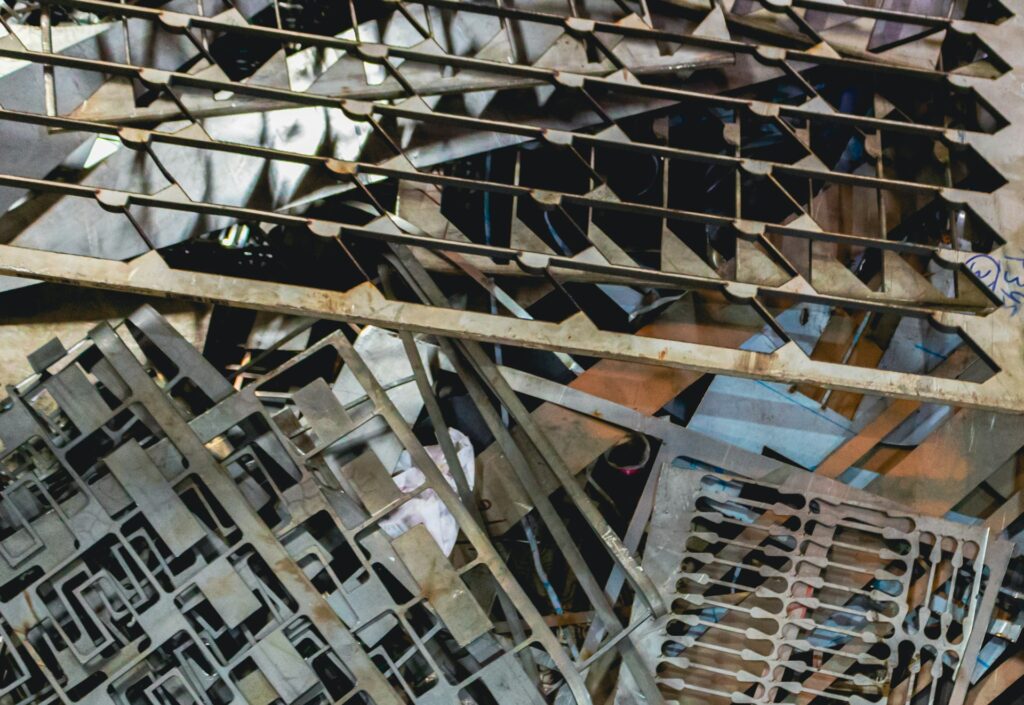
If you walk the floor of a major automotive stamping plant, you will see tons of leftover metal collecting in hoppers. These clean clippings, punchings, and sheet trimmings are known in the trade as busheling steel scrap. It is the absolute highest quality ferrous scrap available on the market. Steel mills fight over it because it is clean, uncoated, and unpainted.
But managing industrial scrap is no longer just about loading metal onto a truck and negotiating a price. The European Union recently rewrote the rulebook on steel circularity. As of August 2026, the new EU vehicle regulation puts massive pressure on automakers, foundries, and recyclers. They must track materials meticulously, increase the percentage of recycled content in new builds, and prove exactly where every piece of scrap originates.
We spend our time building AI tools for circularity at APT Platform B.V. Our work involves integrating computer vision and software automation directly into scrap yards and factory floors. We see firsthand how difficult this regulatory transition is for the industry. You cannot simply claim your steel is recycled anymore. You need hard, auditable data.
In this post, we will cover the primary applications for recycled busheling steel scrap and show you exactly how our tools solve problems in this waste stream.
Busheling is officially classified under the Institute of Scrap Recycling Industries (ISRI) codes 207 for loose material and 208 for baled material. It is prime industrial scrap. Because it comes directly from the manufacturing line, it never enters consumer use. This means it completely lacks the rust, oil, rubber, and non-metallic impurities commonly found in obsolete scrap.
Due to this extreme purity, steel mills highly seek out busheling. They use it to produce premium steel products. Here are the three main applications for recycled busheling steel scrap.
1. High-Quality Flat-Rolled Steel
The most common application is turning busheling right back into flat-rolled steel. Automotive manufacturers and white goods factories need flawless metal sheets for their production lines. Any impurities in the melt will cause microscopic defects, tearing, or weak spots in the final product. Electric arc furnace operators rely on pure busheling to create these pristine sheets. The lack of tramp elements like copper, tin, or chromium ensures the steel can be rolled exceptionally thin without losing structural integrity.
2. Premium Castings for Critical Infrastructure
Foundries use busheling to cast heavy components that face extreme physical stress. Think of wind turbine gearboxes, aerospace components, and heavy industrial machinery parts. These elements require strict metallurgical consistency. Busheling provides a reliable and predictable melt. When casting a one-ton turbine gear, a foundry cannot risk internal flaws caused by contaminated scrap. Prime industrial clippings offer the exact chemical baseline needed for these high-stakes applications.
3. Diluting Lower-Grade Shredded Scrap
Mills rarely melt just one type of scrap. They mix different grades to control costs and achieve specific chemical profiles. Shredded steel from end-of-life vehicles is cheap but often contains trace amounts of copper and tin from overlooked wiring or bearings. Too much copper makes steel brittle and prone to surface cracking during the rolling process. Mill operators use prime busheling to dilute these impurities. The pure busheling balances out the contaminated shredded scrap, keeping the final alloy within strict chemical limits. This precise blending practice is the backbone of modern electric arc furnace economics.
Tracking thousands of tonnes of metal manually is impossible. The sheer volume of paperwork will bury a recycling facility. That is where our technology steps in.
At the APT Platform, we build AI-powered digital tools specifically for industrial circularity. We focus on automating the identification, sorting, and tracking of waste streams. We take the manual guesswork out of scrap management so operators can focus on moving volume.
Our core technology relies on computer vision and multi-modal deep learning architectures that can work on any smartphone. Our vision models analyse the physical material in real time. We train these models to distinguish between prime uncoated busheling, galvanised steel, and painted offcuts.
We do not just rely on standard image recognition. We use advanced multi-modal models that factor in material texture, reflection patterns, and shape profiles. When an industrial shear cuts a steel beam, the edge looks remarkably different than a stamped automotive punching. Our models understand these mechanical differences instantly.
Once the AI identifies the material, our system creates Digital Material Passports that comply with the eFTI and DIWASS transport documentation frameworks. We also make it incredibly easy for facility managers to view this data. We build our client-facing dashboards to ensure the data is accessible and readable on any device.
This means a steel mill receives a verified digital file along with their truckload of scrap. The file proves exactly what the material is, its expected yield, and where it came from. The mill can then pass this precise data along to the automaker, satisfying the EU’s strict audit requirements. We handle the data compliance so the operators can handle the metal.
To show you how this looks on the factory floor, here are three operational scenarios. These examples illustrate exactly how the APT Platform helps recycled busheling steel scrap find circular applications while maintaining strict compliance.
A car manufacturer in Germany stamps thousands of body panels every week. They generate about 50 tonnes of loose busheling daily. In the past, they dumped this metal into yard bins and sold it to brokers for a flat market rate. They completely lost visibility of the material the moment it left their facility.
With the new EU regulations in effect, the automaker needs to prove they are sourcing recycled steel for their new builds. They must close the loop.
The plant uses our computer vision, and the AI verifies that the material consists entirely of clean, uncoated steel punchings. The system automatically logs the exact volume and purity of the batch.
The APT Platform then generates a digital material passport for the shipment. Instead of selling to a middleman broker, the automaker sends the scrap directly to a local foundry. The foundry receives the digital passport via the APT integration hub. They melt the busheling and cast it into new engine blocks, which they sell back to the automaker. The automaker now possesses perfect, auditable proof of their circular supply chain to show EU regulators.
An electric arc furnace in Italy specialises in producing structural rebar for commercial construction. They rely heavily on shredded steel scrap sourced from end-of-life vehicles. It is cost-effective but inherently risky. Shredded scrap often contains hidden copper wire and non-ferrous fragments. If the copper content in the furnace gets too high, the entire batch of steel becomes too brittle to use.
To prevent this catastrophic failure, the mill buys premium baled busheling scrap. They use it specifically to dilute the copper from the shredded vehicles.
However, overusing busheling kills their profit margins. It is a highly expensive material. The mill needs the exact right blending ratio for every single melt.
They use the APT Platform to analyse every incoming truckload of shredded scrap. Our vision transformers assess the visual characteristics of the shredded metal on the intake conveyor. The AI detects visual anomalies that indicate higher contamination levels. Based on this real-time analysis, the software calculates the precise amount of pure busheling scrap needed for the next melt. They use just enough busheling to dilute the copper and pass strict quality control tests. They save money on premium scrap and maintain a flawless digital audit trail for their production process.
A large washing machine factory in Poland generates consistent busheling scrap from their stamping lines. They compress this loose scrap into dense, heavy bales and sell it as ISRI Code 208. Steelmakers pay top dollar for these bales because they are furnace-ready and supposedly pure.
Occasionally, painted panels or galvanised offcuts accidentally fall into the main busheling conveyor. If a mill discovers painted metal inside a bale, they will downgrade the entire shipment. The factory loses significant revenue and ruins their supplier reputation in the process.
The factory deploys an APT vision transformer model directly on the field tablets and phones of employees handling scrap entry. The app spots a batch of white-painted offcuts hidden among the bare steel. The system instantly triggers an automatic warning for the manager. An operator removes the contaminated parts and restarts the line.
The factory keeps its premium pricing tier for the busheling scrap. Furthermore, the APT software logs every successful bale. It links this purity data directly to the outbound logistics manifest using our digital tracking tools. The buyer knows exactly what they are paying for, and the factory maximises the financial value of its secondary materials.
The days of operating a scrap yard based on gut feeling and handshakes are over. The European Union is forcing the entire supply chain to adopt strict digital traceability. Steelmakers demand exact chemical compositions before they open their wallets. Automakers need auditable, line-item data to hit their recycled-content targets.
Scrap is now fundamentally a data business.
Busheling steel scrap will remain the most valuable input for high-quality steel production. But its financial value depends entirely on your ability to prove its purity and its origin. If you cannot provide the data, you will be forced to sell your premium material at a steep discount. The market always punishes uncertainty.
You need automated systems that look at the metal, understand exactly what it is, and generate the correct compliance documents without human intervention. That is exactly what we built. We take the friction out of EU circularity regulations so you can focus on moving your inventory. Our systems run quietly in the background, verifying your material streams and ensuring your Digital Product Passports are perfectly accurate.
To see how our vision models and digital passports can upgrade your material handling, check out the APT Platform home page and schedule a technical demo with our engineering team today.