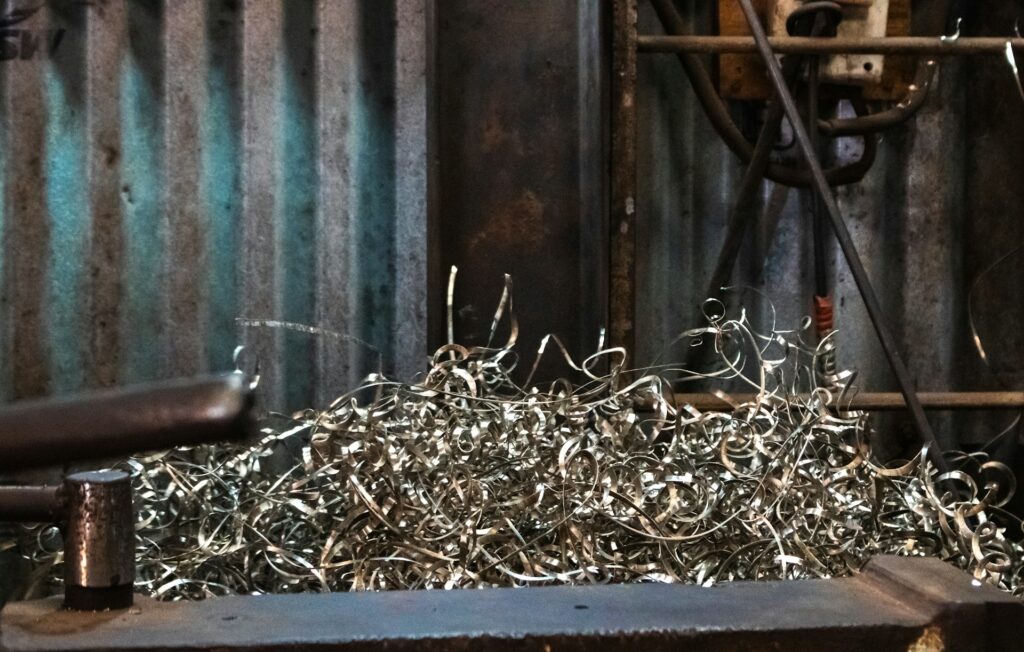
Machining, milling, and turning operations form the backbone of global industrial manufacturing. Every day, factories produce complex components for the automotive, aerospace, and heavy machinery sectors. However, these subtractive manufacturing processes generate massive volumes of secondary materials. Steel turnings, borings, and machining swarf are the inevitable byproducts of shaping solid metal into functional parts.
Historically, industrial facilities treated these materials as low-value waste. Managing them was a logistical burden. Today, the manufacturing sector recognizes these secondary materials as valuable resources. Transforming industrial metal waste into high-value secondary feedstocks requires precise sorting, verifiable origin data, and intelligent matchmaking.
This article explores the high-value applications for recycled steel swarf and borings. We will also examine how the European Union is driving the circularity of steel scrap through stringent policies. Finally, we will demonstrate how the APT Platform leverages artificial intelligence and automation to make these circular supply chains profitable, transparent, and highly efficient.
Before exploring the applications of recycled steel scrap, we must understand the unique challenges associated with managing it. Turnings and borings are very different from heavy structural steel scrap.
First, machining swarf has a very high surface-area-to-volume ratio. This physical characteristic makes the metal highly susceptible to rapid oxidation and rust when exposed to moisture and air. Oxidised steel loses metallurgical value and yields less usable metal when melted down in a furnace.
Second, machining operations rely heavily on cutting fluids, coolants, and lubricants. As a result, steel turnings are rarely clean. They are typically coated in complex chemical emulsions. These residual fluids pose environmental hazards. They also cause dangerous emissions if they are introduced directly into a melting furnace without prior cleaning or thermal treatment.
Third, borings and turnings have very low bulk density. A container full of loose swarf contains more air than metal. Transporting loose swarf is economically inefficient because shipping companies charge by volume, but scrap buyers pay by weight. Moving low-density material over long distances quickly destroys any potential profit margins.
Finally, modern manufacturing uses hundreds of different steel alloys. If a factory mixes high-speed tool steel swarf with standard carbon steel turnings, the entire batch loses its specific metallurgical value. The mixed batch becomes generic scrap. To retain maximum value, factories must keep different alloy streams segregated at the source.
When industrial facilities manage steel swarf correctly, this material becomes highly sought after. Modern metallurgical processes can transform well-sorted, clean turnings into premium industrial inputs. Here are the most prominent circular applications for these secondary materials.
The most direct application for clean steel swarf is as a feedstock for foundries and steel mills. Because loose turnings have low density and burn up easily in a furnace, recyclers use heavy hydraulic presses to compress the loose swarf into dense briquettes.
These briquettes behave like solid chunks of heavy melting steel. Briquetting squeezes out residual cutting fluids, which can be recovered and reused. The resulting dense metal pucks sink into the molten metal bath inside an Electric Arc Furnace rapidly. This fast melting reduces oxidation losses and lowers the energy required to produce new steel. High-quality briquettes made from single-alloy turnings command premium prices from specialty foundries.
One of the most advanced applications for sorted steel scrap is the production of metal powders. Specialized recycling facilities can melt down high-grade, segregated steel swarf and use gas atomization to create fine, spherical steel powders.
These powders are the primary raw material for 3D printing and metal injection moulding. The aerospace and medical device industries rely heavily on powder metallurgy to create complex, lightweight parts. Because metal powders require very specific alloy compositions, the incoming steel swarf must be meticulously tracked and verified. If the origin and chemical makeup of the scrap are guaranteed, recycled swarf can successfully feed the additive manufacturing industry.
Not all steel scrap needs to be melted down to provide value. Iron borings and fine steel swarf have remarkable chemical properties due to their high surface area. Environmental engineering firms use clean iron borings as a reactive medium in wastewater treatment plants.
The iron reacts with heavy metals, chlorinated solvents, and other industrial pollutants in the water, neutralizing them safely. Additionally, chemical companies dissolve steel swarf in acids to produce iron salts like ferric chloride and ferrous sulfate. Municipalities use these chemical compounds extensively for water purification and phosphorus removal in sewage treatment facilities.
The transition toward a circular economy for metals is not just an industry preference. It is a strict regulatory requirement driven by the European Union. The EU has implemented several robust policy frameworks to ensure that valuable secondary materials stay within the European industrial ecosystem.
The Critical Raw Materials Act is a foundational piece of legislation in this area. It mandates that European industries secure sustainable supplies of essential metals. By setting clear targets for domestic recycling capacity, the act forces manufacturers to treat steel swarf as a strategic resource rather than a waste product.
Furthermore, the Waste Framework Directive outlines the End-of-Waste criteria for iron and steel scrap. This directive clearly defines when a recycled material ceases to be classified as waste and becomes a secondary raw material. Meeting these criteria requires strict quality control, documented processing steps, and verified removal of hazardous cutting fluids.
The most transformative regulatory mechanism is the upcoming mandate for digital traceability. The European Union is establishing requirements for detailed material tracking across supply chains. Manufacturers must soon prove the recycled content of their products and track the lifecycle of their materials. Companies that cannot provide accurate data regarding the origin, composition, and processing of their steel scrap will face significant market barriers. You can learn more about how to navigate these regulatory requirements on our Circular Policy page.
Managing the complex requirements of alloy segregation, fluid removal, logistics, and regulatory compliance is incredibly difficult using traditional spreadsheets and manual data entry. The APT Platform solves this exact problem by deploying artificial intelligence and automation directly into the scrap management workflow.
The APT workflow is designed to eliminate human error and maximise material value at every step of the process. The process begins right on the factory floor where the waste is generated. Our specialised computer vision algorithms monitor the scrap bins next to the machining centres. The computer vision AI identifies scrap materials visually, recognising the type, volume, and condition of the swarf.
Once the computer vision system identifies the material, it triggers the most critical step in the workflow. The system automatically initiates or attaches this physical material to a Digital Material Passport. The Digital Material Passport (DMP) is a secure, immutable data record that contains all relevant information about the scrap. It logs the specific alloy grade, the type of cutting fluid used, the time of generation, and the exact machine of origin.
With the Digital Material Passport established, the material is ready for the broader market. The APT Platform subsequently uses this passport data for comprehensive supply chain optimisation. Our logistics and optimization algorithms calculate the most cost-effective and carbon-efficient routing for the material. The software determines whether the scrap should be sent to a local briquetting facility or shipped directly to a specialised chemical plant based on current transport costs and emission targets.
Finally, the platform handles transaction automation. Using the verified data inside the Digital Material Passport, our intelligent matching system connects the scrap generator with the ideal buyer. Foundries looking for a specific grade of steel briquettes can automatically procure the exact material they need. The platform executes the transaction, generates the necessary compliance documentation for EU regulations, and finalises the sale without requiring manual brokerage.
To understand the practical impact of this automated workflow, let us look at three realistic scenarios where the APT Platform transforms the management of steel turnings and borings.
An automotive component manufacturer operates a massive facility producing transmission gears. Their CNC machines generate tons of high-speed tool steel swarf every week. Previously, workers mixed this valuable alloy with standard carbon steel scrap, resulting in a low selling price.
The company installs the APT Platform on the phones of its CNC technicians. The computer vision system immediately identifies the high-speed steel swarf and initiates a Digital Material Passport. The DMP automatically logs the exact alloy specification straight from the factory’s manufacturing execution system.
Because the alloy purity is now verified and documented by the DMP, the APT Platform’s matching engine flags this material for a premium buyer. A powder metallurgy company purchases the batch automatically. The buyer uses this verified swarf to atomise fresh metal powder for 3D-printed automotive prototypes. The company increases its scrap revenue significantly, while the powder manufacturer secures a reliable, high-purity feedstock.
A company manufactures steel components for wind turbines. Their large lathes produce long, continuous strands of steel turnings. These turnings are heavily coated in synthetic cutting fluids and take up excessive space in the scrap yard. Freight costs were destroying their recycling budget.
Using the APT Platform, the factory automates its entire logistics chain. The computer vision system assesses the volume and density of the turnings in real time. Once the bins reach optimal capacity, the system updates the Digital Material Passport and triggers the optimisation module.
Instead of calling a general scrap haulier, the platform’s algorithms calculate that the most profitable route is to send the material to a specialised local processing centre. This partner facility uses centrifuges to strip the cutting fluids and hydraulic presses to create dense briquettes. The DMP tracks the fluid removal process, ensuring the briquettes meet the strict EU End-of-Waste criteria. A regional electric arc furnace automatically purchases the certified briquettes, creating a perfect closed-loop local supply chain.
Another company produces precision landing gear parts. They generate fine steel borings as a byproduct. Because they work in the aerospace sector, they must maintain absolute traceability of all materials entering and leaving their facility to comply with environmental regulations.
The company utilises the APT Platform to manage its compliance and waste streams. The computer vision system identifies the fine borings. The platform initiates a Digital Material Passport that guarantees the metal is free from hazardous heavy metal contaminants often found in other industrial scrap.
This specific guarantee of chemical purity allows the matching module to bypass traditional metal recyclers entirely. The platform automatically sells the fine borings to a municipal environmental engineering firm. The engineering firm uses the high-surface-area steel borings as a reactive filtration medium to remove phosphorus from urban wastewater. The company automates its regulatory compliance reporting through the platform, while the municipality receives a highly effective water treatment material.
The transition from a linear manufacturing model to a circular economy requires more than just good intentions. It requires granular data, automated logistics, and verified material origins. Steel turnings, borings, and machining swarf hold immense value for powder metallurgy, electric arc furnaces, and environmental engineering.
By utilising edge-deployed computer vision to identify materials and initiate Digital Material Passports, the APT Platform removes the friction from industrial recycling. Supply chain optimisation and automated matching ensure that every ton of steel scrap finds its highest-value circular application. Companies that adopt these AI-driven workflows will not only comply with the latest European Union regulations but will also turn their waste management operations into highly profitable revenue streams.