Recycled high-density polyethylene (rHDPE) applications rarely make headlines, yet they quietly hold up a large part of Europe’s plastics economy. HDPE is the material behind milk bottles, detergent packs, drainage pipes, wheeled bins and fuel tanks. It sorts well, it washes well, and it survives several heat histories without falling apart. In short, it is one of the best recycling candidates in the polymer family.
Even so, a lot of good HDPE still leaves the loop. The problem is usually not the polymer. The problem is that nobody knows enough about a specific batch to buy it with confidence. This article looks at where recycled HDPE goes today, which EU rules are now pushing demand upward, and how APT Platform uses AI and automation to connect a bale of scrap with the buyer who actually needs it.
HDPE is a semi-crystalline polymer with high stiffness, good chemical resistance and strong impact behaviour at low temperatures. Because of this, it tolerates reprocessing better than most commodity plastics. A well-sorted post-consumer stream can go through several cycles before its mechanical properties drop below spec.
Recyclers usually split HDPE into a few commercial grades:
Each grade behaves differently in a moulding machine. Melt flow index, density, odour, colour consistency and residual contamination all decide which product a batch can enter. Therefore, the value of recycled HDPE depends far more on data quality than on tonnage.
Below are the product families that account for most of the rHDPE volume across the EU.
Blow-moulded bottles remain the largest single outlet. Detergent, cleaning product and personal care brands routinely use 30% to 100% post-consumer recycled content in coloured bottles. Natural food-grade rHDPE from bottle-to-bottle plants also returns into milk and dairy packaging, although capacity for this route is still limited across Europe.
Wheeled waste bins, stackable crates, pallets, buckets and IBC pallets are high-volume homes for coloured and mixed rigid HDPE. Colour is not a problem here, because the parts are usually dark grey, green or black. Wall sections are thick, so a wider melt flow window is acceptable. As a result, this segment absorbs material that packaging converters would reject.
Non-pressure applications take large volumes of recyclate. Typical examples include structured-wall drainage and sewer pipe, cable protection ducts, stormwater attenuation crates, inspection chambers, damp-proof membranes and geomembrane backing layers. Pressure pipe in PE100 still relies mainly on virgin resin, mostly for long-term hydrostatic performance reasons. Non-pressure lines, however, are a mature and stable market for rHDPE.
Plastic lumber, decking, fence posts, benches, noise barriers, cable drums, planters and compost bins all use recycled HDPE. These products favour thick sections and dark colours, which suits recyclate with variable pigment loads. Moreover, they are often produced regionally, which shortens the transport leg.
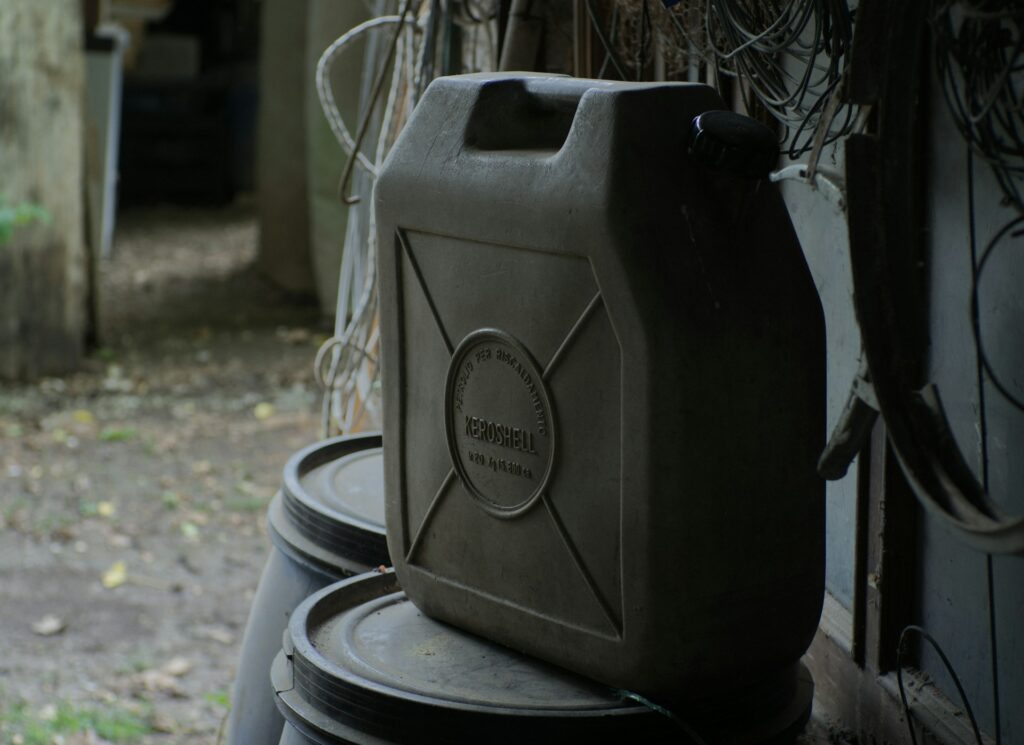
Vehicles use HDPE mainly in fuel tanks, washer fluid reservoirs, underbody shields, air ducts and battery trays. Recyclate from these streams now feeds back into non-visible technical parts. This route has become far more interesting since the EU introduced closed-loop recycled content targets for cars.
Regulation has become the strongest single driver behind recycled HDPE applications. Several files now overlap, and together they turn recyclate from an optional input into a compliance asset.
The Packaging and Packaging Waste Regulation (PPWR), Regulation (EU) 2025/40, has been in force since 12 August 2026. From 1 January 2030 it sets minimum recycled content per plastic packaging unit. Contact-sensitive packaging made from plastics other than PET must reach 10%, while other plastic packaging must reach 35%. Both figures rise sharply in 2040, to 25% and 65%. Most HDPE packaging sits in these two brackets, so the effect on demand is direct. You can read the full text on EUR-Lex.
The End-of-Life Vehicles Regulation entered into force on 13 August 2026. It requires at least 15% recycled plastic in new vehicles from 2032, rising to 25% from 2036. Crucially, at least a fifth of that recycled content must come from end-of-life vehicles themselves. This closed-loop condition creates a guaranteed buyer for automotive HDPE that previously drifted into low-value outlets. The European Commission has published an overview of the new rules.
The Circular Economy Act, due for adoption during 2026, aims to build a genuine single market for secondary raw materials. It should also clarify the end-of-waste status for mechanically recycled polymers, which remains one of the biggest practical blockers in cross-border rHDPE trade.
The Waste Shipment Regulation (EU) 2024/1157 governs how these streams move between countries. Because most recycled HDPE applications involve a buyer in a different member state, shipment classification and documentation determine whether a deal is workable at all.
The Ecodesign for Sustainable Products Regulation (ESPR) adds the Digital Product Passport. Manufacturers will need verifiable recycled content data, and that data has to originate somewhere upstream. Recyclers who can supply it will hold a commercial advantage.
Together these files set a clear direction. Demand for recycled HDPE is being written into law, but only for material that arrives with credible evidence attached. For a wider view of the policy landscape, see our circularity strategy page.
A sorting facility produces around 70 tonnes per month of coloured post-consumer HDPE from a rigid household fraction. The material is clean, yet its melt flow index varies between batches. Buyers ask for lab data the operator does not have, and quotations stall for weeks.
Using APT, a yard operator photographs each incoming lot with a standard smartphone. The Visual AI Engine recognises the material family, estimates grade and volume, and flags likely contaminants such as polypropylene closures and residual label adhesive. That assessment becomes a Digital Material Passport at batch level, which records origin, composition, Euralcode and regulatory status.
The Matching Module then compares this passport against active demand profiles. It identifies a wheeled-bin producer that needs dark recyclate for a thick-wall core layer, where a wider melt flow window is acceptable. The system prepares the offer, the contract and the shipment paperwork automatically. Instead of six weeks of email exchanges, the operator receives multiple quotations within days.
A packaging manufacturer accumulates off-spec HDPE drums, purge material and trimmings. The regrind is technically excellent. However, some drums were originally destined for agrochemical filling, so every prospective buyer asks the same question about prior contents.
Here, the answer is documentation rather than laboratory work. In APT, the producer records production origin, prior-use category, cleaning protocol and additive package once. The Digital Material Passport carries that record forward with each batch, so the same question does not have to be answered from scratch for every enquiry.
Matching routes the material to an extruder producing cable protection ducts, a non-food, non-pressure application where the prior-use profile is acceptable. Meanwhile, the Automation module generates the Annex VII shipment document, the CMR and the invoice. The producer converts a recurring disposal cost into a monthly revenue line.
Eleven dismantlers across nearby cities each recover a modest quantity of HDPE fuel tanks and washer reservoirs. Individually, none of them has enough volume to interest a compounder. In addition, fuel tanks are multilayer structures with an EVOH barrier and adhesive tie layers, which restrict where the recyclate can go.
APT aggregates the eleven sites into a single virtual lot through supply chain optimisation. Each contributing batch keeps its own passport, so the origin chain stays intact from vehicle deregistration onward. That chain of custody is exactly what the ELV Regulation’s closed-loop provision requires.
The platform matches the combined lot to a compounder supplying a Tier 1 producer of underbody shields and battery trays. Collection routes are planned across the eleven sites in one pass, which cuts transport cost per tonne significantly. Consequently, a stream that used to go into low-grade mixed rigids now serves a regulated automotive application at a much higher price.
Across all three cases, the same four steps repeat:
The underlying insight is simple. Circularity in industrial materials is mostly an unstructured data problem. Once a batch of recycled HDPE is properly described, the market for it becomes visible.
Recycled HDPE applications are ubiquitous, but Europe lacks reliable information on specific batches, and that gap keeps good material trapped in low-value outlets. With PPWR now in force and automotive targets locked in, the cost of that gap is rising every year.
APT Platform is currently onboarding Founding Partners among processors, recyclers and manufacturers who want to close it. If you handle HDPE streams and want to see how much value your current documentation is leaving on the table, explore the Matching Module or get in touch through our contact form.