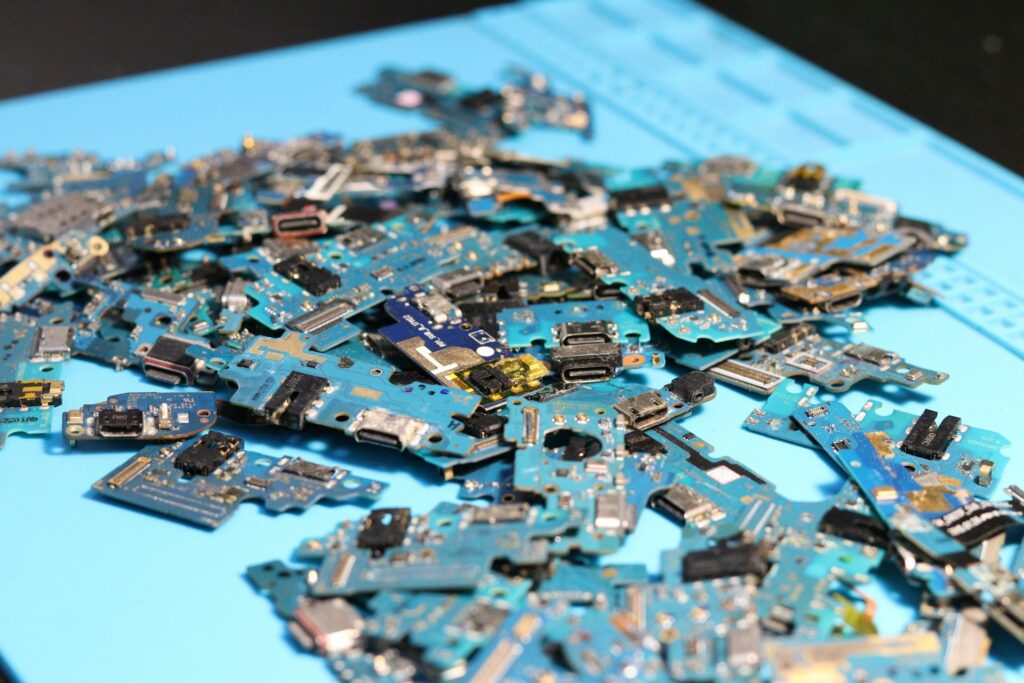
Electronic waste is growing faster than any other type of waste in the world. People buy new phones, laptops, and household appliances every day. Old devices often end up in landfills. However, these discarded items are not just trash. They are a rich source of valuable resources.
Companies can recover these resources and use them again. This process is called circularity. Turning old electronics into new products saves money and protects the planet. It reduces the need to mine new metals. It also lowers greenhouse gas emissions.
In this post, we will explore the different types of electronic scrap. We will look at the best applications of recycled e-waste materials. We will also discuss the latest European Union rules on e-waste. Finally, we will show how the APT Platform helps circularity companies use AI to track, optimise, and sell these materials.
Before we can reuse materials, we must understand what is inside electronic waste. E-waste is very complex. A single smartphone contains dozens of different elements. We can group e-waste scrap into several main categories.
Printed circuit boards are the brains of modern electronics. You will find them in computers, televisions, and even washing machines. PCBs contain a mix of valuable metals. They include copper, gold, silver, and palladium. Recovering these metals is difficult but highly profitable.
Every electronic device needs power. Cables and wires connect our world. These items are mostly made of copper and aluminium. They are covered in plastic insulation. Recyclers strip the plastic away to reach the clean metal inside.
Look at your computer monitor, your keyboard, or your printer. They are mostly covered in plastic. These hard plastics protect the delicate electronics inside. E-waste contains many types of plastic, such as ABS and polycarbonate. These plastics are often mixed with flame retardant chemicals. This makes recycling them a big challenge.
Mobile devices run on lithium-ion batteries. These batteries contain critical materials. They hold lithium, cobalt, nickel, and manganese. These elements are in high demand for electric vehicles. Battery recycling is a very fast-growing industry.
Old televisions and computer monitors contain a lot of glass. Some older screens contain dangerous lead. Newer flat screens contain valuable elements like indium. Recycling screens requires special care to protect workers and the environment.
Once companies separate and clean the scrap, the materials are ready for a new life. Recycled e-waste materials have many exciting applications across different industries.
The most valuable parts of e-waste are the precious metals. Recyclers extract gold and silver from old circuit boards. Manufacturers then buy these metals. They use them to build brand new circuit boards. Copper from old cables is melted down. It is then drawn into new wires for the construction industry. Using secondary metals saves huge amounts of energy compared to mining raw ores.
Plastic casings from old electronics are shredded into small flakes. Companies melt these flakes and turn them into new plastic pellets. Automotive companies use these recycled plastics to make car bumpers and dashboard parts. Furniture makers use them to create durable outdoor chairs.
You can read more about how companies improve this process on our optimisation solutions page.
Magnets inside old hard drives and speakers contain rare earth elements. These include neodymium and dysprosium. These elements are vital for the green energy transition. Manufacturers use recycled rare earth elements to build powerful magnets for wind turbines. They also use them in electric vehicle motors.
Recyclers carefully dismantle old smartphone batteries. They extract the lithium and cobalt. Battery manufacturers buy these materials. They use them to build new, high-capacity batteries for electric cars and solar power storage systems.
The European Union wants to lead the world in sustainability. The EU has created strict rules to manage electronic waste. These rules force companies to take responsibility for their products.
The Waste Electrical and Electronic Equipment (WEEE) Directive is a core piece of EU law. It sets targets for collecting and recycling e-waste. It requires manufacturers to help pay for the recycling of their products. This directive stops dangerous chemicals from entering the soil.
The EU relies heavily on other countries for rare metals. The Critical Raw Materials Act aims to change this. It encourages companies to recover critical metals from local e-waste. This secures the supply chain for European manufacturers. It makes Europe less dependent on foreign mining.
The EU Green Deal introduces a new requirement. Products sold in Europe will soon need a digital product passport. This passport will show where the product’s materials came from. It will prove how much recycled material the product contains.
Companies must prepare for these new laws today. You can learn more about staying compliant by visiting our circular policy page.
Recycling e-waste is a massive data challenge. Scrap arrives mixed. Quality varies every day. Buyers need proof of exactly what they are purchasing. APT Platform provides AI-powered tools for circularity companies to solve these problems.
Manual data entry causes mistakes and slows down recycling operations. We use artificial intelligence to automate material tracking. Our tools analyse waste streams and categorise scrap automatically. This gives recyclers a clear picture of their inventory.
Discover our smart automation tools on our AI solutions page.
Buyers want to know the exact composition of recycled materials. They need to trust the quality. APT Platform creates secure Digital Material Passports for recycled e-waste materials. A DMP contains all the technical data about a batch of recycled plastic or metal. It proves the material’s origin and carbon footprint.
See how you can build trust with our Digital Material Passport module.
Sorting e-waste is expensive. If a company sorts too slowly, they lose money. If they sort too quickly, the quality drops. Our software uses advanced algorithms to find the perfect balance. It tells facility managers how to run their machines for maximum yield and minimum energy use.
Learn how to boost your yield on our optimisation page.
A recycler might have five tons of high-grade recycled copper. Finding the right buyer at the right price is difficult. APT Platform offers a smart matching engine. It connects companies that have secondary materials with manufacturers who need them.
Explore our marketplace technology on our matching module page.
To understand how this technology works, let us look at three realistic examples. These stories show how APT Platform tools help secondary materials find their way back into the economy.
A company operates a large cable recycling facility in Germany. Every week, they produce high-quality copper granules from old computer cables. In the past, they sold this copper to a local middleman for a low price. They lacked the network to find better buyers.
The company started using the APT Platform. First, they used the AI tools to standardise their inventory data. You can explore these AI solutions here. Then, they listed their copper granules on the platform.
The platform’s smart algorithms immediately went to work. The system matched the recycling company with an automotive parts manufacturer in France. The manufacturer needed exact specifications for electric vehicle wiring. Because the system verified the copper’s purity, the transaction happened quickly.
The recycling company increased their profit margin. The manufacturer secured a reliable supply of green copper. You can see how this works on our matching module page.
A company in the Netherlands shreds mixed electronic waste. They separate the metals easily. However, they struggle with the leftover plastic scrap. The plastic is a messy mix of ABS and polystyrene. Their optical sorting machines were running inefficiently. They were losing good plastic to the waste pile.
The company integrated the APT Platform into their facility. They focused on improving their sorting settings. You can learn about these methods on our optimisation solutions page. The software analysed their historical sorting data. It identified bottlenecks in their process.
The system suggested new calibration settings for their optical sorters. The company applied the changes. Their pure ABS yield increased by fifteen percent in one month. They now produce a high-purity plastic flake. They sell this flake to a company that makes recycled computer mice.
To stay ahead of changing waste regulations, the company also monitors the latest rules via our circular policy page.
A company in Sweden specialises in recovering neodymium magnets from old hard drives. They have a brilliant chemical process to extract the rare earth elements. A major wind turbine manufacturer wanted to buy their materials. However, the manufacturer demanded strict proof of origin and a low carbon footprint.
The Swedish company needed a secure way to share this sensitive data. They turned to the APT Platform. They used the system to generate a unique digital identity for every batch of recovered neodymium.
You can explore this technology on our Digital Material Passport module page. The passport included data on the origin of the hard drives. It showed the energy used during the chemical extraction. It proved that the secondary neodymium had a ninety percent lower carbon footprint than mined metals.
The wind turbine manufacturer accepted the passports. They signed a multi-year purchase agreement with the recycling company. The company also used our matching module to find buyers for their lower-grade byproducts. Finally, they use our AI tools to automate the creation of these passports every week.
The transition to a circular economy is no longer optional. It is a strict requirement for doing business in Europe. Electronic waste will continue to grow. But with the right technology, this waste becomes a valuable resource.
Recyclers must adopt digital tools to stay competitive. They must track materials accurately. They must optimise their sorting processes. They must connect directly with manufacturers.
APT Platform B.V. is dedicated to building the AI-powered tools that make this possible. We help circularity companies turn scrap into high-value assets. By working together, we can ensure that the valuable materials inside our old devices continue to power the future.