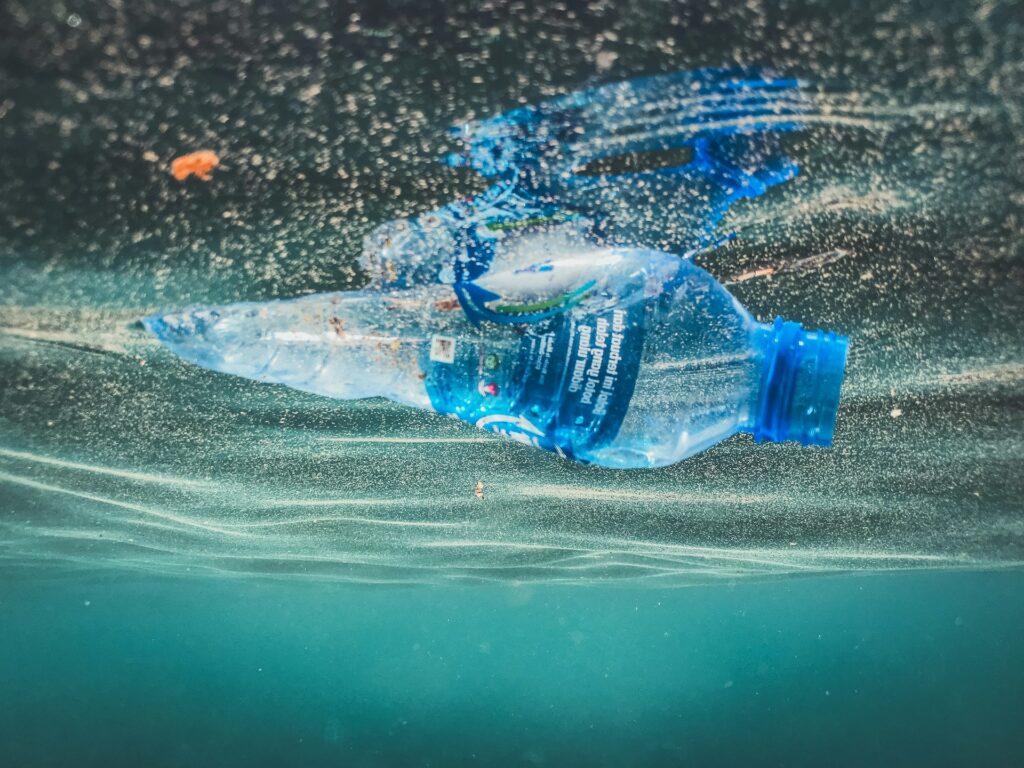
The global transition toward a circular economy relies heavily on our ability to effectively process and reuse engineered plastics. Polyethylene terephthalate (PET) is highly recyclable, yet a significant portion of recovered material still ends up downcycled into lower-grade products. Unlocking the true potential of recycled PET applications requires a transition from manual sorting and disjointed supply chains to data-driven material tracking.
However, despite the high demand for recycled PET (rPET) across various sectors, the supply chain remains fractured. Industrial waste is still largely a “black box” where chaotic scrap is difficult to classify, value, and trade safely. Contamination of the input stream, rather than the underlying polymer chemistry, creates the primary bottleneck in this process.
In this post, we’ll explore the top applications of rPET plastics and demonstrate how the APT Platform is using advanced AI, Digital Material Passports, and supply chain automation to resolve the bottlenecks in the rPET market.
When sorted and processed to exact specifications, rPET serves critical roles across demanding industrial sectors:
High-purity, food-grade rPET is used to manufacture new water, soda, and juice bottles, as well as food containers like salad domes and fruit punnets. Reintegrating PET into food-contact applications demands the strictest purity standards. Any contamination compromises food safety and structural integrity during blow molding. Achieving bottle-to-bottle circularity remains the gold standard for packaging manufacturers aiming to meet strict European regulatory quotas.
Have you ever worn a fleece jacket or running shoes made from recycled materials? A massive application for rPET lies in the textile industry. rPET flakes are spun into polyester fibers, which are then woven into sustainable clothing, backpacks, and upholstery.
Beyond basic apparel, rPET is spun into high-tensile industrial fibers used in strapping, geotextiles, and automotive carpets. These manufacturing processes require continuous, unbroken filament extrusion. The raw material must be completely free of particulate contaminants to prevent the extrusion lines from breaking.
The automotive sector increasingly relies on rPET for structural and aesthetic components. It is commonly spun into carpets, boot linings, seat covers, and even sound insulation. Advanced composites utilizing recycled polymers require consistent rheological properties to meet safety and performance specifications. Variability in the plastic resin directly impacts the tensile strength of the final molded part.
Lower-grade rPET, which might not pass the strict aesthetic or hygiene requirements for packaging, finds a robust second life in the construction industry. It is utilized in insulation panels, damp-proof membranes, and engineered sheets.
If the applications of recycled polyethylene terephthalate plastics are so diverse and valuable, why do vast amounts of PET still end up downcycled, landfilled, or incinerated?
Processing facilities face massive variability in inbound scrap bales. A single batch might contain clear PET bottles, colored trays, and non-PET contaminants. As the material undergoes mechanical recycling, trace amounts of incompatible polymers cause chemical degradation, drastically reducing the structural performance of the final resin.
Manufacturers cannot commit to utilizing rPET in high-performance product lines without absolute certainty regarding the material’s structural integrity and molecular genealogy.
APT Platform BV engineers the AI infrastructure needed to solve complex material-tracking challenges for circularity enterprises. We bridge the data gap between waste processing and precision manufacturing through targeted software modules.
Manual inspection and legacy optical sorters leave unacceptable margins of error. We deploy multi-modal deep learning and semantic segmentation directly on your phone. Using advanced Convolutional Neural Networks, our visual AI engine identifies specific material types and contamination levels in real time. This pre-screening ensures that only the highest-purity PET advances to the factory gate.
Manufacturers require rigorous documented proof of a material’s history before integrating it into a production line. APT Platform includes a robust Digital Material Passport module that tracks mass balance metrics and the molecular genealogy of every batch. This infrastructure aligns directly with the EU Digital Product Passport (DPP) framework, generating the regulatory documentation buyers need to utilize rPET in compliance-heavy industries.
Connecting a specific grade of rPET with the appropriate buyer remains a highly fragmented process. Our platform acts as an intelligent marketplace. Once a batch of recycled polymer is processed and its parameters are logged, our algorithm instantly matches the material with industrial buyers whose precise engineering specifications align with the available stock.
Treating information as a core industrial asset allows processing facilities to upgrade their material outputs, enabling manufacturers to confidently expand their recycled PET applications.
How do these digital tools translate into real-world value for the applications of rPET plastics? Let’s look at three practical use cases.
The Scenario: A recycling facility receives a massive, unclassified bale of PET scrap. To sell this to a beverage packaging company for food-grade bottles, they must guarantee zero hazardous contaminants.
The APT Solution: An operator points a standard smartphone at the scrap stock. The APT Visual AI Engine instantly interprets the visual cues, texture, color, shape, and markings to estimate the composition and specifically flag hazardous items. A Digital Material Passport is attached to the batch, validating its purity.
The Outcome: The facility secures a premium price for high-purity food-grade rPET, and the beverage brand secures safe, compliant packaging materials.
The Scenario: A textile manufacturer needs a consistent supply of specific colored rPET flakes to spin into polyester yarn for a new sustainable clothing line, but navigating public marketplaces is time-consuming and risks IP exposure.
The APT Solution: Unlike traditional marketplaces, APT operates as a private Digital Circularity Exchange. The Matching Module acts as an analytical brain, actively seeking out verified recyclers generating the exact rPET grade required.
The Outcome: The textile manufacturer accesses a 60% deeper outreach network without manual searching. Once matched, the platform automates the entire Source-to-Pay (S2P) transaction, from quotation to invoice and logistics routing.
The Scenario: An industrial facility produces residual mixed PET waste. Because it isn’t cleanly sorted, they assume it has no value and plan to pay for it to be incinerated or landfilled.
The APT Solution: By capturing a quick photo via the APT app, the facility’s team receives instant LLM-guided market feedback. The AI identifies the material as perfectly suitable for automotive carpet manufacturing.
The Outcome: What was previously considered a waste liability is algorithmically routed to an automotive supplier. The industrial facility achieves a multiple-times better valuation for its scrap, preventing premature downcycling while reducing its carbon footprint.
The applications of recycled polyethylene terephthalate plastics are virtually limitless, but unlocking their full potential requires intelligent, data-driven supply chains. With the APT Platform, processing partners, material generators, and sustainable brands can connect instantly, trading unclassified scrap as high-value, traceable assets with a single tap.
Are you ready to modernize your waste management and supply chain? APT is currently in its Pilot Deployment Phase, onboarding forward-thinking manufacturers and processors. Request Early Access today to join our Founding Partners and deploy the full power of AI-driven circularity across your operations.