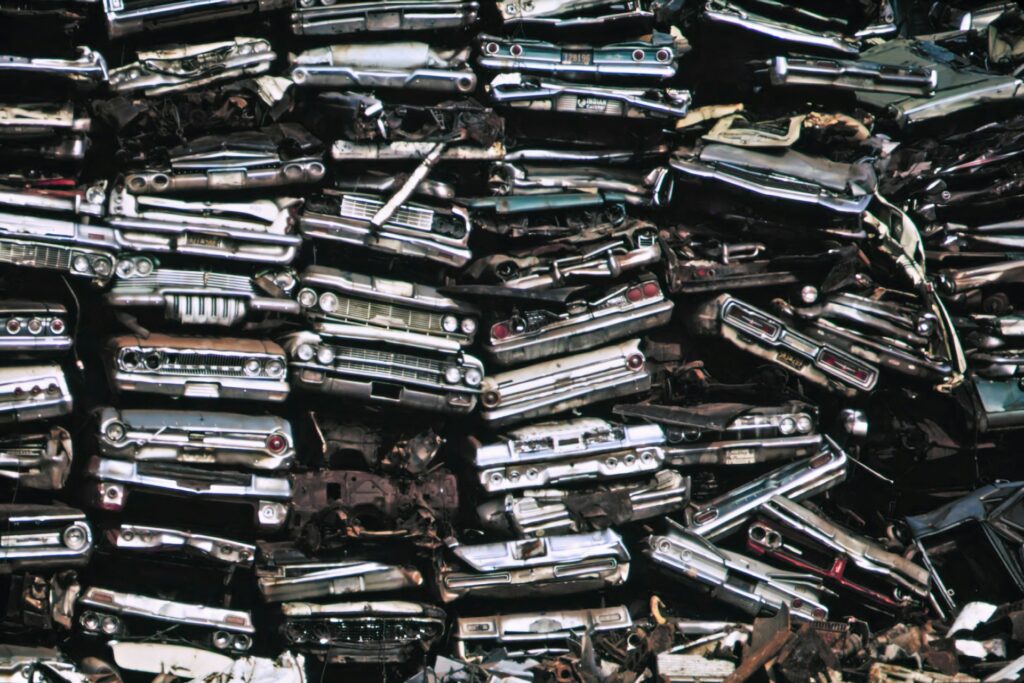
Shredded steel scrap recycling begins with a violent step. A hammer mill tears cars, white goods and light structural steel into fist sized pieces. The noise suggests destruction. The purpose is separation.
That difference matters. A shredder does not just make metal smaller. It breaks the bonds between materials that were welded, bolted, glued or clipped together decades ago. Once those bonds are broken, magnets, air and sensors can finally do their work.
So one truckload of end of life material leaves the plant as several different products. Each fraction has its own buyer, its own price and its own end use. This post follows those fractions to where they actually go. It also covers the new EU rules that now shape them, and the data work that decides what they sell for.
A shredder plant handles a mixed diet. End of life vehicles, fridges, washing machines, office furniture, light demolition steel and baled sheet all go in together.
What comes out splits into a handful of streams:
The exact split depends on the feed. A load heavy in end of life vehicles behaves very differently from a load of baled white goods. That is why intake records matter so much later on.
Most shredded ferrous scrap ends up in an electric arc furnace. It melts fast because the pieces are small and evenly sized. Charging is quick, and the furnace reaches tap temperature with less energy per tonne than a coarse charge needs.
The everyday products are familiar. Rebar, wire rod, merchant bar, angles and beams all come from this route. A block of flats in Rotterdam is, in part, a fleet of scrapped cars from ten years ago.
Higher value flat steel is harder. Deep drawing grades and automotive sheet need very low copper and tin. Those elements do not burn off in the melt. They stay in the bath and they stay in the finished steel.
This is where shredded steel scrap recycling meets its main technical limit. Frag sold against a European specification such as E40 carries a copper cap, and mills often want tighter numbers than the standard allows. Yards that can prove low residuals reach a completely different set of customers.
Integrated mills also buy shredded material. They use it as coolant in the basic oxygen furnace, where it absorbs excess heat from the hot metal charge. The share is smaller, but the demand is steady and the specification is usually less strict.
Some cleaned frag reaches foundries producing cast components. Brake parts, housings and counterweights all use secondary metal. Consistency matters more here than headline chemistry, so repeat quality wins the contract.
Zorba usually goes to a post shredder treatment plant. Sink float media separation and sensor sorting split it further. The floating fraction, known as twitch, is largely aluminium and feeds secondary smelters.
From there it becomes engine blocks, gearbox housings, wheels and extrusion billet. Cast alloys tolerate mixed input well, so this loop is genuinely circular.
Zurik looks like waste and behaves like ore. Optical and induction sorting pull out stainless steel for remelting into new stainless products. The insulated wire goes to granulation, and the recovered copper heads for refining.
Copper is the awkward one. Copper is a contaminant in steel and a valuable product on its own. Removing it twice, once before shredding and once after, raises the value of both streams.
Residue used to be a disposal problem. That is changing. Plastics recovered from the light fraction now have a buyer, because carmakers need post consumer material to meet recycled content rules. Polypropylene bumpers and interior trim are the obvious targets.
The mineral heavy fraction can go to construction applications where it meets local rules. Any part contaminated with persistent organic pollutants still needs controlled treatment, and the paperwork for that is not optional.
Three developments in 2026 changed the outlook for anyone shredding steel in Europe.
The End of Life Vehicles Regulation. The Council formally adopted the new ELV Regulation on 29 June 2026, after the Parliament vote earlier that month. It replaces the old directive, so member states cannot soften it. Most requirements apply two years after entry into force.
Three parts matter for shredder operators. First, certain components must be removed before shredding, including wire harnesses. That takes copper out of the feed at source. Second, new vehicles must contain at least 15 percent recycled plastic within six years, rising to 25 percent within ten years, with a share of that coming from vehicles. Third, the Commission must study recycled content targets for steel and aluminium and may set them by delegated act.
Scrap trade monitoring. Under the Steel and Metals Action Plan, the Commission activated customs surveillance of metal scrap imports and exports in July 2025. It covers ferrous scrap, aluminium and copper. The stated aim is better data before any trade measure. A targeted measure on aluminium scrap has also been in preparation, which affects the Zorba side of the yard.
Waste shipment rules. The revised Waste Shipment Regulation brings electronic documents and stricter export conditions. Annex VII data now travels with the load in structured form, so late or vague paperwork creates real delays.
Read together, the direction is clear. Europe wants more of its scrap melted inside Europe, at a higher quality, with evidence attached.
Sorting well is a mechanical problem. Selling well is a data problem. APT works on the second one.
Grading from images. Our Visual AI Engine reads intake and outbound material from photographs. It flags feed that looks wrong for the target grade, such as heavy motor content in a load booked as light iron. Operators get a consistent view across shifts, not one that depends on who is on the weighbridge.
A record for every fraction. The Digital Material Passport holds origin, EWC code, analysis results, treatment steps and photographs for each output stream. When a mill asks for copper values on a specific consignment, the answer takes seconds. The same record supports the traceability that the ELV framework now expects.
Finding the right furnace. The Matching Module connects a documented fraction to buyers whose specification it actually meets. Low residual frag should not be sold at commodity prices because nobody knew what was in it.
Paperwork without retyping. Our document automation builds shipment documents from the passport data already in the system. Annex VII forms, analysis certificates and conformity statements come from one source.
Fewer empty kilometres. Route optimisation groups collections and deliveries so trucks run fuller. Shredded material is dense, and freight is a real share of the margin.
Policy context for all of this sits in our circular policy hub.
The following scenarios are fictional. They describe the kind of work APT supports.
A shredder plant processes around 180,000 tonnes a year. Its frag has always gone to the same two traders at index price.
The plant starts logging every outbound batch in the Digital Material Passport, with spectrometer results attached. After four months the data shows something useful. Loads built from a specific white goods supplier run consistently below 0.20 percent copper.
The Matching Module surfaces two German mills that pay a premium for that profile. The plant does not change its equipment. It changes what it can prove, and it segregates one bay to protect the better material.
A treatment operator receives Zorba from three shredders. Output quality swings, and customers complain about magnesium levels in the twitch.
The Visual AI Engine is set up on the intake conveyor. It scores incoming Zorba by visual composition and flags batches that differ from the supplier’s usual profile. The operator now blends deliberately rather than by feel.
Each twitch batch leaves with a passport showing input sources and sorting steps. An Italian secondary smelter agrees to a fixed volume contract, because the variability is now documented instead of discovered on arrival.
Six authorised treatment facilities pool their vehicle intake. Under the new rules they remove harnesses and selected components before hulks go to the shredder.
Each removal step is recorded once, on site, in the Digital Material Passport. The shredder receiving the hulks inherits that history. It can show a mill exactly why its frag carries less copper than the market average.
The group also lists recovered bumper plastics through the platform. Document automation prepares the transfer paperwork, so a small compounder can buy without a week of email.
If you shred steel in Europe, four habits will pay off before 2028:
None of this requires new machinery. It requires the data around the machinery to be usable.
Shredded steel scrap recycling has always been a separation business. The separation now extends to the paperwork. Yards that manage both will choose their customers, and the rest will keep taking whatever the index offers.
To see how a documented shredder fraction moves through the platform, explore the Matching Module or reach us through our contact form.