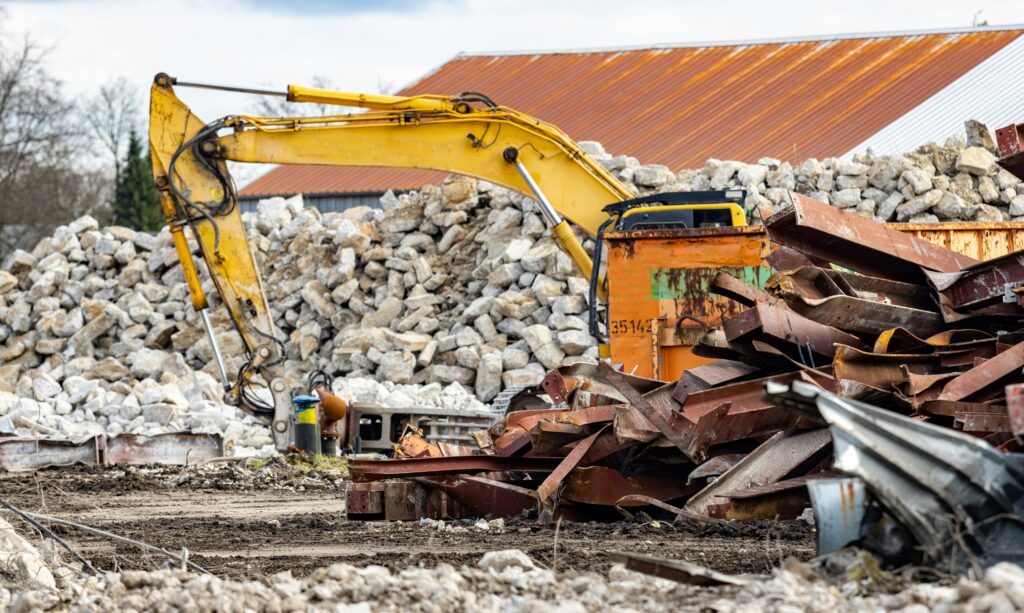
The construction sector is one of the largest producers of waste in the world. Building new structures and demolishing old ones generates massive amounts of leftover materials. We must change how we handle this material to protect our environment. Transitioning to a circular economy is the clear solution. In a circular economy, we view waste not as garbage, but as a valuable resource.
This post explores the various types of construction waste. We will look at practical applications for these secondary materials. We will also discuss current European Union regulations that guide these efforts. Finally, we will show how artificial intelligence and smart automation can solve major recycling challenges.
The European Union takes construction waste very seriously. The EU has introduced strict rules to promote sustainability. The main goal is to reduce environmental impact and keep materials in use for as long as possible.
The Waste Framework Directive is a key piece of European legislation. This directive set a mandatory target for all member states. The target requires that 70% of non-hazardous construction and demolition waste must be recovered. Recovery includes recycling and preparing materials for reuse. You can learn more about how to navigate these rules by exploring our circular policy framework.
Additionally, the European Green Deal pushes the construction sector toward complete climate neutrality by 2050. The Circular Economy Action Plan is a major part of this deal. This plan focuses heavily on the built environment. It demands better building designs that allow for easier dismantling and recycling. Meeting these regulations requires accurate tracking and reporting.
Demolition and construction sites produce a wide variety of materials. We must sort and process these materials correctly to reuse them. Here are the most common types of construction waste.
Concrete and bricks make up the largest volume of demolition waste. These materials are very heavy and bulky. However, they are also highly durable and perfect for recycling.
Construction sites generate large amounts of metal scrap. This includes steel beams, aluminum frames, and copper wiring. Metals are highly valuable because they do not lose their quality during the recycling process.
Wood waste comes from framing, structural timber, and shipping pallets. We can easily reuse untreated wood. Treated wood requires careful processing to remove chemicals safely.
Plastics are common in pipes, insulation, and packaging. Rubber often comes from old vehicle tires used by construction fleets or specialized building materials. Both materials offer excellent potential for chemical and mechanical recycling.
Old windows and glass doors provide an abundance of glass waste. Glass can be melted down and reformed endlessly without degrading.
Recycling these materials creates secondary raw materials. These secondary materials can replace virgin resources in many different industries.
Recycling facilities crush old concrete into small pieces. This crushed concrete serves as an excellent aggregate. Road builders use this aggregate as a stable base layer for new highways. It is also used to mix fresh concrete for new building foundations.
Recycled steel is melted down to create brand new structural beams. Aluminum scrap is transformed into modern window frames. Copper wiring is stripped, melted, and spun into new electrical cables. This saves immense amounts of energy compared to mining new metal ores.
Reclaimed wood is highly sought after for its unique appearance. Builders use reclaimed timber for hardwood flooring and exposed structural beams. Lower quality wood is chipped and pressed into particleboard or used as biomass fuel.
Recycled plastics are melted and molded into new plumbing pipes and outdoor decking. Crushed glass is melted to create new fiberglass insulation or fresh window panes.
Finding the right buyer for recycled materials can be difficult. Ensuring the quality of secondary materials is also a major challenge. The APT Platform solves these problems using advanced software designed exclusively for circularity companies.
Our tools automate the difficult steps of material recovery. We use data to connect the dots in the circular supply chain.
Manual sorting and tracking take too much time. Our AI module uses machine learning to classify waste streams accurately. The AI evaluates the quality of secondary materials instantly. This ensures that buyers know exactly what they are purchasing. Read more about our advanced AI capabilities.
Buyers need proof of material history and quality. The Digital Material Passport (DMP) records every detail of a material’s lifecycle. It tracks origin, chemical composition, and previous usage. This transparency builds trust and guarantees compliance with EU laws. Discover how to create a Digital Material Passport for your inventory.
Suppliers often struggle to find local buyers for their waste. Our Matching module connects sellers of secondary materials directly with buyers who need them. The system calculates distance, material grade, and volume to find the perfect fit. Explore how our Matching technology speeds up sales.
Running a recycling facility requires extreme efficiency. Our Optimisation tools help companies streamline their daily operations. The software analyzes workflow bottlenecks and suggests improvements to lower energy use. See the benefits of our Optimisation software.
To understand the true value of these tools, we can look at three practical examples. These fictional yet realistic scenarios show how companies use the APT Platform to achieve their circular goals.
A company specializes in demolishing old commercial buildings. During a recent project, they generated a massive stockpile of crushed concrete. In the past, they would have paid heavy fees to send this concrete to a landfill.
Instead, the company used the Matching module. They uploaded the details of their crushed concrete into the system. The platform instantly scanned the local region. It found a road construction business just 15 kilometers away that urgently needed aggregate for a new highway base.
The system connected the two businesses. This deal saved the demolition team disposal fees and provided the road builder with cheap, sustainable materials. The platform completely automated the connection process.
A company focuses on saving structural steel from old warehouses. Steel beams are highly valuable, but new buyers demand strict safety documentation. The company needed a reliable way to prove the structural integrity of their secondary steel.
They implemented the Digital Material Passport (DMP) system. For every beam recovered, they generated a secure digital record. The passport included details about the steel’s original manufacturing date, its load-bearing history, and its current condition.
By attaching these passports, the company easily sold the beams to a modern architectural firm. The firm used the passports to prove their new building met strict circular policy standards. The passports eliminated all doubts about the quality of the recycled steel.
A company processes mixed construction plastics and old rubber tires. Sorting these materials manually was slow and expensive. They struggled to separate different grades of plastic efficiently.
The company integrated our AI module and Optimisation tools into their facility. The AI tools analyzed incoming waste streams and automatically classified the plastic types. The optimisation software then restructured their daily sorting schedule based on the real-time AI data.
As a result, the facility increased its processing speed by 40 percent. They produced a much purer stream of recycled plastics. They then easily sold these pure plastics back to pipe manufacturers. The combination of AI and Optimisation completely transformed their business model.
The transition to a circular built environment is no longer optional. It is an urgent environmental requirement and a legal necessity. Secondary materials recycled from construction waste offer immense value. We can turn old concrete, steel, wood, and plastic into the foundations of our future cities.
Technology is the bridge to this sustainable future. The APT Platform provides the exact tools needed to make this transition profitable and efficient. By utilizing Digital Material Passports, advanced AI sorting, and intelligent supply matching, companies can easily navigate the complex world of circularity. Embracing these innovations ensures compliance with the latest circular policies while driving sustainable growth.