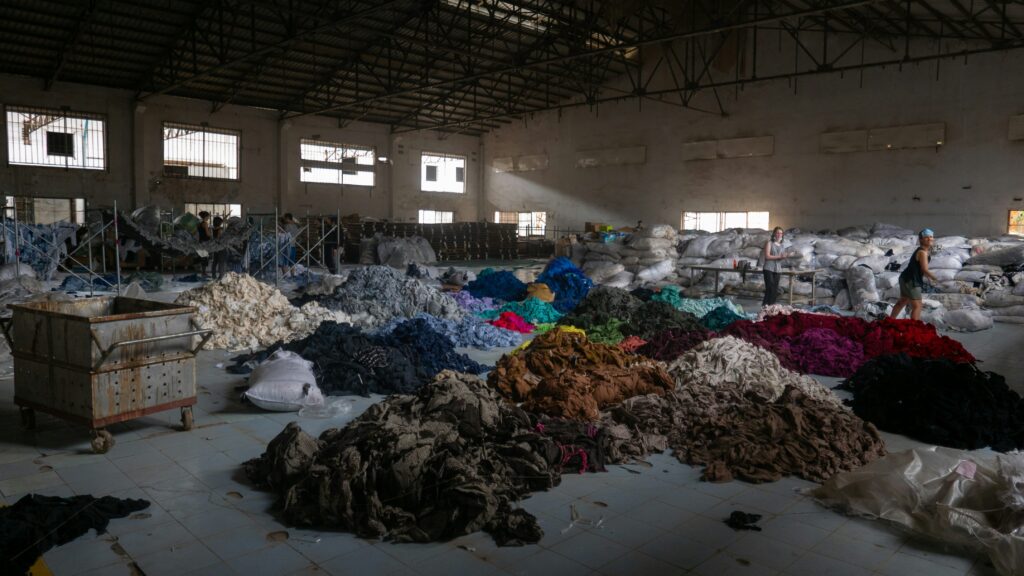
The global textile industry produces a massive amount of material every year. A large portion of this material eventually becomes waste. For decades, the standard practice was to send these materials to landfills. Many textiles were also incinerated. However, this linear economic model is no longer sustainable. Environmental concerns are growing rapidly. Furthermore, raw material shortages are increasing globally. We must transition to a circular economy. In a circular economy, waste is viewed as a valuable resource.
Secondary materials recycled from textile scrap offer incredible potential. These materials can reduce the environmental footprint of multiple industries. They also provide economic benefits to forward-thinking companies. Achieving true circularity is not simple. It requires advanced sorting, deep traceability, and smart logistics. This is where modern technology steps in. Artificial intelligence and automated systems are changing the recycling landscape.
This article explores the vast world of recycled textile scrap. We will look at the different types of textile waste. We will examine the exciting applications for these secondary materials. We will also review the current European Union regulations driving this change. Finally, we will explore how the APT Platform empowers companies to build efficient, compliant, and profitable circular supply chains.
The European Union is taking strong action against textile waste. Policymakers recognize that textiles have the fourth highest impact on the environment and climate change in the EU. Therefore, strict regulations are being implemented. These rules force companies to rethink how they handle products at the end of their life cycles.
A major initiative is the EU Strategy for Sustainable and Circular Textiles. This strategy aims to ensure that by 2030, all textile products placed on the EU market are durable, repairable, and recyclable. It heavily promotes the use of recycled fibers. It also seeks to eliminate the destruction of unsold textiles. The goal is to make circular textiles the norm rather than the exception. You can read more about aligning with these goals in our circular policy solutions.
Extended Producer Responsibility (EPR) schemes are also becoming mandatory across member states. Under EPR, producers are financially responsible for the entire lifecycle of their products. This includes the collection, sorting, and recycling phases. This financial burden is driving producers to invest heavily in better recycling infrastructure. It also encourages them to design products that are easier to recycle from the start.
Furthermore, the EU is implementing strict traceability rules. The upcoming Digital Product Passport (DPP) requirements will mandate transparent supply chains. Every product will need a digital record of its origins, materials, and recyclability. For industrial waste shipments, regulations are equally tight. The Waste Shipment Regulation (WSR) and the electronic Freight Transport Information (eFTI) framework require precise documentation for moving secondary materials across borders. Staying compliant with these shifting rules can be difficult. Our circular policy compliance tools help businesses navigate this complex regulatory environment seamlessly.
Before we can recycle textiles, we must understand the materials we are dealing with. Textile scrap is generally divided into two main categories. These are pre-consumer waste and post-consumer waste.
Pre-consumer textile scrap is generated during the manufacturing process. It includes offcuts, flawed rolls of fabric, and yarn waste. This type of scrap is usually clean. It is also well-sorted because it comes directly from factory floors. As a result, it is much easier to recycle. The composition of pre-consumer waste is known, making the recycling process highly predictable.
Post-consumer textile scrap is much more complex. This category includes garments and household textiles discarded by consumers. Post-consumer waste is highly mixed. A single collection bin might contain cotton shirts, polyester jackets, and wool sweaters. Sorting this mixture is a massive challenge.
Beyond these two categories, we must also classify textiles by their fiber content.
Accurate identification of these fibers is the biggest bottleneck in textile recycling. Human sorters cannot accurately identify fiber compositions just by touching them. To solve this, the industry relies on advanced technology. By utilizing AI computer vision models, facilities can automate the identification and sorting of mixed textile waste with high precision.
When textile scrap is properly sorted and processed, it becomes a highly versatile secondary raw material. Recycled textiles are used across many different industries. These applications are generally split into closed-loop recycling and open-loop recycling.
Closed-loop recycling happens when a product is recycled back into the same type of product. In the textile industry, this means turning old clothes into new clothes. Pure cotton garments can be shredded into fibers. These fibers are then spun into new yarn. Because mechanical shredding shortens the cotton fibers, they are often blended with virgin cotton to maintain strength. Synthetic materials like pure polyester can be chemically recycled. The polymer chains are broken down and rebuilt into brand new polyester fibers. This process creates high-quality yarn that is identical to virgin materials.
Open-loop recycling involves turning textile waste into different products. This is often called downcycling, but the resulting products are incredibly useful. Open-loop applications currently consume the vast majority of recycled textile scrap.
Automotive Industry: The automotive sector is a massive consumer of recycled textiles. Shredded textile scrap is transformed into non-woven insulation materials. These materials are placed inside car doors, under carpets, and in trunk linings. They provide excellent soundproofing and thermal insulation.
Construction and Building Materials: Recycled textiles are making buildings greener. Denim scrap is heavily used to create acoustic and thermal insulation panels for homes. These panels are safe, non-toxic, and highly effective. They offer a sustainable alternative to traditional fiberglass insulation.
Furniture and Bedding: Shredded mixed textiles serve as excellent stuffing materials. They are used to fill mattresses, couch cushions, and decorative pillows. The material is dense, durable, and cost-effective.
Agriculture and Horticulture: Recycled textile fibers are used to create weed control mats for agriculture. They are also used to make capillary mats for greenhouses, which help distribute water evenly to plant roots.
Finding the right buyer for these secondary materials is crucial for profitability. Our intelligent material matching system connects producers of sorted textile scrap directly with manufacturers in the automotive, construction, and furniture industries.
Managing the flow of secondary textile materials requires deep intelligence. The supply chain must be transparent, efficient, and compliant. The APT Platform provides a comprehensive suite of AI-powered modules to make this happen.
First, accurate sorting is mandatory. The APT Platform AI module uses multi-modal computer vision to recognize different types of waste materials on sorting lines. It helps automated systems identify fiber types and contamination. This ensures that the sorted bales meet the strict quality grades required by industrial buyers.
Once the material is sorted, it needs a verified identity. This is where our Digital Material Passport (DMP) comes in. The DMP creates a secure digital twin for every batch of secondary raw material. It records the origin, fiber composition, processing history, and carbon footprint. When a buyer purchases a bale of recycled cotton, they can instantly verify its quality and sustainability metrics through the DMP.
Connecting supply with demand is another major hurdle. Recyclers often struggle to find consistent buyers for specific scrap streams. The APT Platform solves this through intelligent supply and demand matching. The system analyzes the exact specifications in the DMP and matches the material with industrial buyers who need those specific properties.
Finally, moving these materials requires complex logistics and legal compliance. Moving waste across EU borders involves strict WSR Annex VII forms and eFTI documentation. The logistics optimization module automates all transport documentation. It plans the most carbon-efficient routes and ensures every truck is fully compliant with European transport regulations.
To understand the power of this technology, let us look at three fictional but highly realistic scenarios. These use cases demonstrate how the APT Platform helps companies turn textile waste into valuable resources.
A company operates a large municipal waste sorting facility. They receive thousands of tons of mixed post-consumer textiles every month. Previously, they relied entirely on manual labor to sort these garments. Human sorters could easily separate heavy winter coats from light t-shirts. However, they could not accurately distinguish between pure cotton and polycotton blends. As a result, the facility could only sell their output as low-grade mixed rags.
The company decided to implement the APT Platform AI module into their sorting line. Cameras and sensors now scan every garment on the conveyor belt. The AI models analyze the material properties in real time. The system then directs automated robotic arms to separate the pure cotton garments from the synthetic blends.
Every time a bale of pure cotton is completed, the system automatically generates a Digital Material Passport. This passport proves that the bale has a 98 percent purity rate. Because the company can now guarantee the purity of their cotton, they sell the bales to high-end fashion brands for closed-loop recycling. Their profit margins have increased significantly, and much less material is sent to the incinerator.
A company specializes in collecting pre-consumer textile offcuts from garment factories. They process clean, shredded denim and polyester scrap. Their main challenge was finding reliable, long-term buyers. The textile recycling market can be volatile. The company often had excess inventory sitting in their warehouses.
They integrated their inventory systems with the APT Platform matching tools. The platform analyzed the mechanical properties of their shredded denim. It then automatically identified potential buyers outside the traditional fashion industry. The system matched the company with a tier-one automotive parts manufacturer in Germany.
The automotive manufacturer needed high-quality acoustic insulation for a new line of electric vehicles. They required strict documentation regarding the origin and environmental footprint of the insulation. The recycling company used the Digital Material Passport to instantly provide all the required sustainability metrics. A long-term supply contract was established. The recycling company now has a stable revenue stream, and the automotive manufacturer has secured a reliable source of green materials.
A company in the Netherlands processes mixed synthetic textiles into plastic pellets. These pellets are highly sought after by construction firms. The company recently secured a large contract to supply these secondary materials to a construction panel manufacturer in Eastern Europe. However, they immediately ran into logistical nightmares.
Shipping secondary raw materials across European borders requires navigating complex waste shipment laws. The company’s logistics team spent hours filling out WSR Annex VII forms manually. Documentation errors led to trucks being delayed at borders. These delays caused friction with their new client.
To solve this, the company deployed the APT Platform optimization suite. The software integrated directly with their digital material records. When a shipment was ready, the platform automatically generated all required eFTI datasets and DIWASS API integrations. It instantly produced error-free, compliant transport documents aligned with EU circular policy regulations. Border delays were completely eliminated. The automated routing also reduced transport emissions by ten percent. The company can now scale their cross-border operations without hiring a massive administrative team.
The transition to a circular textile economy is inevitable. Environmental necessity and strict EU regulations are pushing industries to adapt rapidly. Secondary materials recycled from textile scrap are no longer just waste. They are valuable commodities that can power the automotive, construction, and fashion industries.
However, unlocking this value requires sophisticated data management. AI-driven sorting, precise digital traceability, automated matching, and compliant logistics are essential tools. By utilizing advanced technologies like the APT Platform optimization tools, businesses can overcome the complexities of the secondary raw material market. The future of textiles is circular. The technology to build that future is available today.